
· by Michael Blair, Nashville's Appliance Repair
Refrigerator cooling problems have a wide range of causes, and the symptom pattern narrows them a long way before anyone opens the machine. Which compartment is warm, whether it runs without stopping, and what the door does with a sheet of paper tell us where to start on a refrigerator repair call, and most of them you can check yourself first.
What if only the fresh-food side is warm?
When the freezer is holding and the fresh-food side isn’t, we look at air movement first, meaning whether cold air is getting from the freezer section into the fridge. We check three things in order: a vent packed shut with food, an evaporator fan that isn’t running, and frost built up over the evaporator. The first one is yours to clear before you call anyone.
Frost is the one we take longest over. On a frost-free model, a thick coat of ice on the evaporator sends us to the defrost parts. On a manual-defrost freezer, the Department of Energy’s guide to kitchen appliances says to defrost it periodically and not let frost get thicker than a quarter of an inch, and even ENERGY STAR’s efficiency checklist for hotels, motels and inns has property managers verify their defrost timers and keep the cold-air supply and return registers clear.
What if both sides are warm?
Start with the simple things: the temperature setting, condenser coils choked with dust, a condenser fan that has stopped, the unit pushed tight against the wall, or door seals that don’t close. ENERGY STAR’s refrigerator page puts the right setting at 35 to 38 degrees Fahrenheit, says to leave a few inches between the wall and the refrigerator, and says to keep it away from an oven, a dishwasher or direct sun through a window. Those are written as energy-saving tips, and they’re also the first things we look at on a warm one.
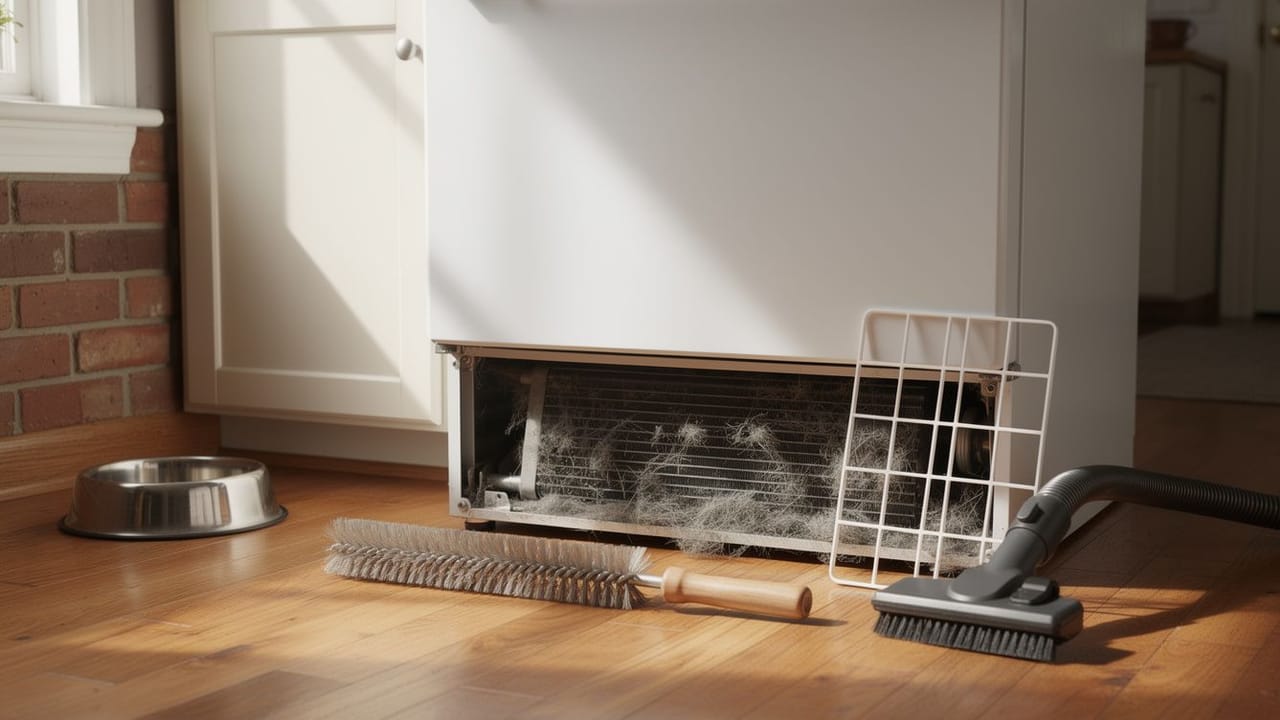
Dusty coils are worth checking, mostly in homes with pets, a busy kitchen or construction dust nearby. Whirlpool’s guide to cleaning condenser coils says clean coils help a refrigerator cool efficiently and hold a steady temperature, that a normal home doesn’t typically need routine coil cleaning, and that those busier households should inspect and clean them every 3 to 6 months. On many models you can do it yourself: unplug the refrigerator, unclip the base grille and go over the coils with a soft brush or a vacuum. Read the owner’s manual before you start, since Whirlpool also says some models don’t need the coils cleaned at all and others can only be cleaned by a certified technician.
- Fridge warm, freezer fine: vents, evaporator fan, frost
- Both warm: setting, coils, condenser fan, wall clearance, seals
- Coils: check the manual; every 3 to 6 months with pets or dust
- Door seal: the sheet-of-paper test
- Clean coils, fans running, seals good, still warm: the sealed system
The seal test
Close the door on a sheet of paper and try to pull it out. The Department of Energy’s guide asks whether the paper holds fast and says to replace the seals if it doesn’t, and ENERGY STAR’s hotel checklist gives the same test for refrigerators and freezers: if the paper pulls out easily, replace the gasket. We work our way around the whole door, top, bottom and both sides, because one stretch can let go while the rest still grips.
Whirlpool’s refrigerator maintenance schedule lists a yearly inspection of the door seals to cut down on air leaks, keep the refrigerator running efficiently and help prevent frost and condensation from building up, and it says to clean the gaskets monthly with warm water. Gaskets are a replaceable part, so a failed paper test is a part to order, not a verdict on the machine.
When it is the sealed system
If the coils are clean, both fans run, the seals pass the paper test and it still runs without getting cold, we test the sealed system next: the compressor and the refrigerant circuit. That’s the repair to have priced before you decide anything, and it’s worth reading what your appliance warranty covers before anyone opens the sealed system up.
Age weighs on the answer. ENERGY STAR’s hotel checklist tells properties with residential-type refrigerators to consider replacing any that are more than 9 to 10 years old, which is advice written for saving energy rather than about repair bills, so we treat it as one input among several. Our post on whether an appliance is worth repairing works through the rest, and a diagnostic visit puts the actual part and labor figures for your model in front of you. If yours is warm now, ask us for an estimate.
Sources
- U.S. Department of Energy, EERE, Guide to Kitchen Appliances (2010) — Sheet-of-paper door seal test and replacing seals that fail it; defrost manual freezers and keep frost under a quarter inch
- ENERGY STAR, Refrigerators — Set the refrigerator at 35 to 38 degrees Fahrenheit; leave a few inches between the wall and the refrigerator; keep it away from an oven, a dishwasher or direct sun
- ENERGY STAR, Energy and Water Efficiency Checklist for Hotels, Motels, and Inns (2023) — Verify defrost timers and keep cold-air registers clear; paper test for door gaskets; consider replacing residential-type refrigerators more than 9-10 years old
- Whirlpool, How and When to Safely Clean the Condenser Coils — Clean coils help cooling and steady temperatures; routine cleaning not typically needed in a normal home; every 3 to 6 months with pets, heavy traffic or construction dust; unplug first; some models need no cleaning or a technician
- Whirlpool, Preventative Maintenance for Refrigerators — Coils listed as a yearly task; yearly door seal inspection against air leaks, frost and condensation; clean gaskets monthly with warm water
FAQ
When a Refrigerator Stops Cooling — questions
Why is my fridge warm but the freezer is cold?
We look at how cold air gets from the freezer section into the fridge first. A vent blocked by packed food, an evaporator fan that has stopped and frost built up on the evaporator are the three things we check, in that order, and the first is one you can clear yourself. On a frost-free model, heavy ice on the evaporator points us to the defrost parts.
How often should I clean refrigerator coils?
It depends on the model and the house. Whirlpool’s maintenance schedule lists coil cleaning as a yearly task, while its coil guide says a normal home doesn’t typically need routine cleaning and that homes with pets, heavy kitchen traffic or construction dust should inspect and clean every 3 to 6 months. Some models don’t need it and some can only be cleaned by a technician, so check the owner’s manual and unplug the refrigerator first.
Is a compressor replacement worth it?
It depends on the machine’s age, the part price for your model and what is still under warranty. ENERGY STAR’s efficiency checklist for hotels suggests considering replacement of residential-type refrigerators more than 9 to 10 years old, which is an energy recommendation, so on an older refrigerator we weigh a compressor against that before quoting it. Find the warranty paperwork and get a diagnosis with the actual figures before deciding.
How do I know if my refrigerator compressor is not working?
It takes a test, after the simpler causes are ruled out. When the coils are clean, both fans run, the door seals pass the paper test and the refrigerator still runs without getting cold, we test the compressor and the refrigerant circuit. That sealed-system repair is the one to have priced before you decide anything.