
· by Michael Blair, Nashville's Appliance Repair
The sound is hard to miss: tick, tick, tick, and no flame. Sometimes it is one burner that will not catch. Sometimes the whole cooktop keeps clicking after the knob is turned off, or starts on its own after the stovetop was wiped down. Most of the time the cause is something you can check in a few minutes without tools. This post goes through what the clicking means, what to look at first, and where it becomes a job for our oven and range repair service. One thing comes before all of it: if you smell gas, skip the checks and get out of the house.
Why does a gas burner click but not light?
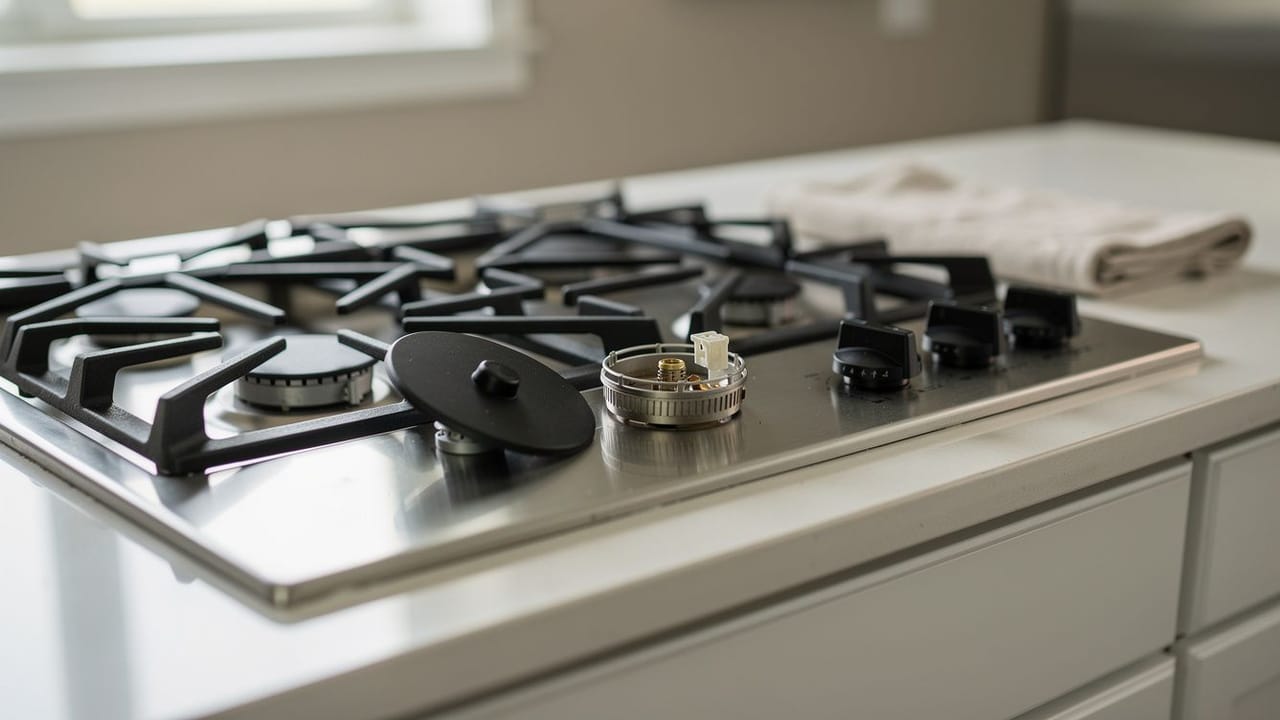
A burner clicks without lighting when the spark is there but the gas is not meeting it the way it should. The clicking is the igniter sparking, so the range has power. The usual reasons the flame does not catch are a burner cap that is not seated, a cap on the wrong burner, wet parts after cleaning or a boil-over, or ports blocked with food.
KitchenAid’s help page on gas range clicking says the cap has to sit on the burner base to light and work properly, with its alignment pins lined up, flush with the base and barely able to move side to side. It also says each cap has to be on the base it belongs to, and some ranges mark the matching pairs. Caps of different sizes look alike once they are off the stove, and a small cap on a large base will not light right.
Sub-Zero Wolf’s guide to gas surface burner clicking is written for its own Wolf cooktops, but its list of causes is useful on any gas range: spills, how the burner is placed and assembled, the size of the pot, the spark module, switch, electrode or igniter, a short or poor gas supply, wiring, and even use of the oven. It notes that a large pot on a high setting can starve a burner of air and keep it clicking.
Why does the stove keep clicking with every knob off?
Clicking with all the burners off usually means moisture has got into the igniter switches behind the knobs. KitchenAid says this often follows cleaning or a spill, that the parts need time to dry, and that pulling the knobs off and blowing cool air from a hair dryer onto the knob shafts speeds it up. Keep the dryer on cool.
If drying does not stop it, check that no knob is stuck pushed in, which can hold its switch closed. Wolf also suggests switching off the range’s breaker for 30 seconds and back on. If the cooktop sparks when nothing is in use, Wolf’s guide says to have an electrician check the outlet, since wiring faults or reversed polarity at the receptacle can cause constant sparking.
If none of that ends it, the switch for one burner may have failed or the spark module may be faulty. Both are parts we replace, and a cooktop that never stops clicking is not one to leave plugged in for weeks.
What can you safely check before calling us?
Start with the parts you can lift off. With the burners off and cool, take each cap and ring off, wash and dry them, and clear any food from the ports with a dry, stiff brush. Put each cap back on its own base, line it up on the pins, and make sure it sits flat. Let everything dry fully before you try it.
Then try the burner the way Wolf describes. If it has not lit within about 10 seconds, turn it off, wait a minute so the gas clears, and try again. A burner that has not been used in a while can click longer than usual the first time while air clears from the line. Try it without a pot first, then with a smaller pan.
If one burner lights and another does not, the problem is in that burner, its cap, its electrode or its switch. If none of them light and the oven will not either, the gas supply to the range may be the issue, and that call goes to your gas company or a licensed plumber, not to an appliance tech.
If you smell gas, and when it needs a repair
A rotten-egg smell changes everything. The US Department of Transportation’s pipeline safety office gives the standard guidance for recognizing and responding to a natural gas leak: do not strike a match, start an engine, use a phone, or flip light or other electrical switches on or off near the smell; make sure gas appliances are turned all the way off; leave the area; and call 911 from a neighbor’s house or somewhere well away. That advice is written for pipeline leaks, but it is the right rule in a kitchen too. A clicking igniter is a spark, so do not keep trying a burner while the smell is there.
Without a gas smell, it becomes a repair once the parts are dry, clean and seated and the burner still will not light, or the clicking will not stop. At that point the likely parts are the electrode or igniter at the burner, the switch behind the knob, or the spark module. Our post on an oven that will not hold its temperature covers the oven side of a gas range.
In Mt. Juliet, Nashville and the towns around them, tell us the make and model and what the burner is doing. We will find which part has failed, replace it, and test every burner before we leave.
Sources
- KitchenAid Product Help (Whirlpool Corporation), Clicking or Ticking: Gas Range — Clicking with burners off from moisture in the switches; drying time and cool air on the knob shafts; burner cap seated flush on its pins, and the right cap on the right base
- Sub-Zero Wolf, Wolf Gas Surface Burner Clicking — Wolf-specific guide: causes from spills, assembly, pot size, spark module, switch, electrode, igniter and gas supply; retry after 10 seconds and a one-minute wait; breaker reset; electrician for sparking when not in use
- US DOT Pipeline and Hazardous Materials Safety Administration, Recognizing and Responding to Pipeline Emergencies — Natural gas leak response: no matches, engines, phones or switches; turn gas appliances fully off; leave; call 911 from well away
FAQ
Gas Stove Burner Clicks but Will Not Light — questions
Why won’t one burner light on my gas stove?
When only one burner fails, the cause is in that burner. Check that its cap is the right one for that base, lined up on its pins and sitting flat, and that the ports are clean and dry. If it still sparks without lighting, its electrode or switch may need replacing.
Why won’t my gas burner light after cleaning?
Water in the burner or in the igniter switches is the usual reason, along with a cap put back crooked or on the wrong base. Let the parts dry fully, or pull the knobs and blow cool air from a hair dryer onto the shafts, then reseat each cap flat on its own base.
How do I stop a gas stove from clicking?
Make sure every knob is fully off and none is stuck pushed in. If the cooktop was just cleaned, let the switches dry or blow cool air on the knob shafts. Switching the range’s breaker off for 30 seconds can reset it. If it still clicks, a switch or spark module has failed.
Is it safe to keep using a gas stove that keeps clicking?
A burner that clicks a little longer before lighting is not dangerous in itself, but a stove that sparks with every knob off has a fault that should be repaired. If you ever smell gas, stop trying the burner, leave the house, and call 911 from somewhere well away.
Should I call a plumber or an appliance repair tech for a burner that won’t light?
If other burners and the oven light, the problem is in the range, so call an appliance repair tech. If nothing on the range will light, the gas supply may be at fault, which is work for your gas company or a licensed plumber. If you smell gas, leave and call 911 first.