
· by Michael Blair, Nashville's Appliance Repair
Most of what keeps an appliance running is a handful of plain tasks that are easy to put off. Nashville’s water is moderately hard, as Metro Water Services’ 2023 water quality report describes it, and that adds a couple more for anything that heats water.
How do you look after a refrigerator?
Clean the condenser coils every six to twelve months, the interval in the Department of Energy’s fact sheet on appliance maintenance, and sooner if you have a shedding dog or cat or the fridge sits in a garage, as GE Appliances’ guide to cleaning condenser coils advises. Check the door seals with DOE’s paper test: shut the door on one sheet of paper and pull. If it slides out easily, the gasket is due for replacement.
Leave a few inches between the back of the fridge and the wall so air can move, which ENERGY STAR’s refrigerator page also recommends, along with reading the manual before you clean the coils. The payoff is efficiency: the DOE sheet, which dates from 2001, credits regular coil cleaning with as much as 30 percent. If the box stays warm with clean coils and room to breathe, that is a job for our refrigerator repair crews.
Washing machine
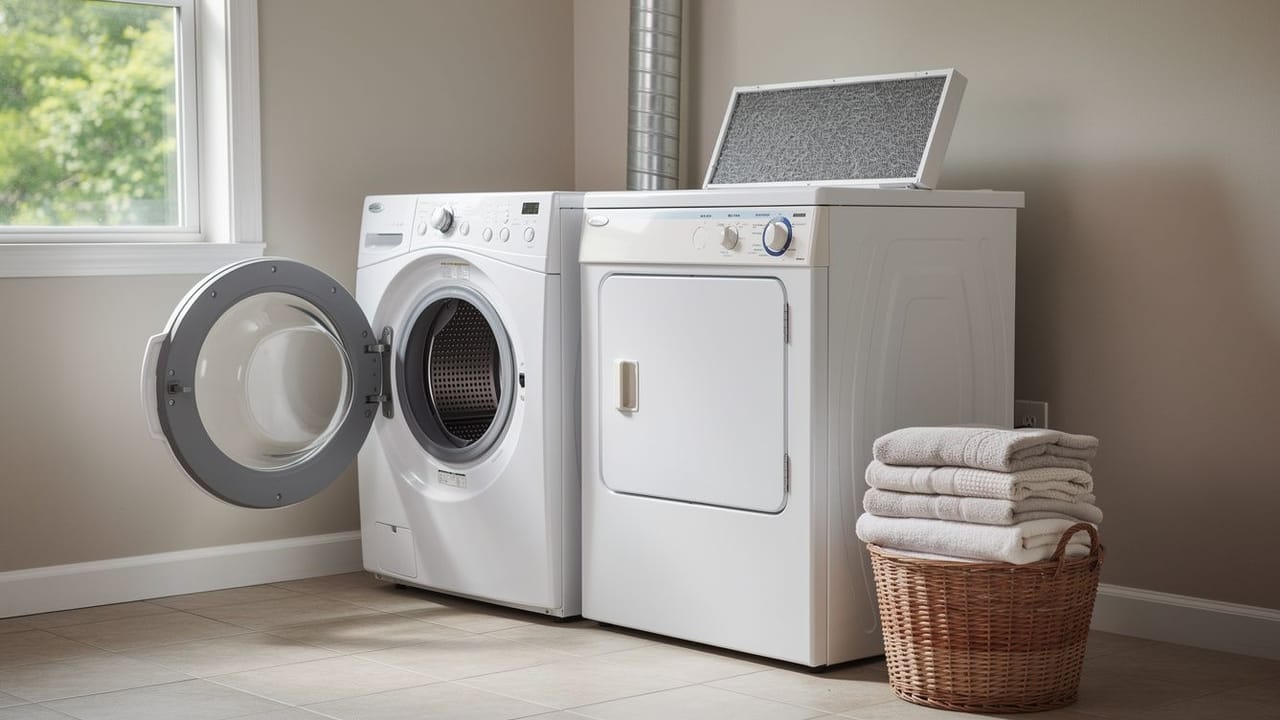
Swap the supply hoses every five years and look them over for cracks, leaks and wear in between, which is what LG’s owner’s manual for its WM8000 washer calls for. LG also says to put new hoses on at installation, never reuse old ones, and use the hoses supplied with the washer, so go by your own maker’s manual on what to fit. On a front-loader, leave the door ajar between washes so the gasket and tub can dry, which helps keep the smell from starting.
After the last load, wipe the inside of the door seal, and run the tub-clean cycle about once a month, which LG recommends; our post on why a front-load washer smells goes through the rest of that routine. The drain pump filter needs clearing too, on whatever schedule your manual gives. When water is still sitting in the drum after a cycle, the fix is usually a washer repair rather than a cleaning.
- Fridge coils every six to twelve months, more with pets or dust
- Washer hoses replaced every five years
- Front-loader door left ajar to dry the gasket
- Dryer vent cleaned once a year, sooner if drying slows
- Water heater flushed once a year, or as its manual says
How do you keep a dryer safe?
Clear the lint filter before or after every load and clean the vent pipe once a year, the routine in NFPA’s clothes dryer safety tips, which names failure to clean as the leading cause of home dryer fires. The U.S. Fire Administration’s report on residential dryer fires estimated about 2,900 a year nationwide in 2008 to 2010, with dust, fiber and lint the items most often ignited first. Of everything on this list, the vent is the task with that kind of record behind it.
Longer drying times are the practical signal that the duct is restricted, and NFPA says to clean it sooner than a year once you notice them. Check that the outdoor flap opens while the dryer runs; our post on a dryer that takes two cycles covers the other causes.
Hard water items
Metro Water Services’ 2025 water quality report puts total hardness at 100.5 mg/L, with a range of 88.5 to 128.4, which by the report’s own conversion is about six grains per gallon, right where its scale moves from medium hard to hard. The treatment plant does not take hardness out. When that water is heated, the USGS explains, calcium carbonate scale forms, and it can shorten the life of a water heater, raise the cost of heating water and clog pipes.
Flush the water heater once a year until the water runs clear, which Bradford White’s water heater manual asks for to keep lime and sediment from building in the bottom of the tank; makers set their own schedules, so check the one on your heater. A white film on glasses can be hard-water residue, though GE Appliances points out that phosphate-free detergent leaves the same film, and it suggests a dishwasher cleaner either way. If you add a softener, Bradford White warns that softened water can wear the anode rod faster, so inspect it more often than its usual two years. And if something here has already quit, ask us for a free estimate.
Sources
- Metro Water Services, 2023 Consumer Confidence Report — Nashville’s water is considered moderately hard
- Metro Water Services, 2025 Consumer Confidence Report — Total hardness 100.5 mg/L (88.5 to 128.4, 2023 data); 17.1 mg/L = 1 grain per gallon; hardness scale; treatment does not remove hardness
- U.S. DOE EERE, Energy-Efficient Appliances: Selection and maintenance guidelines (2001) — Coils every six to twelve months, up to 30 percent efficiency; door seal paper test
- GE Appliances, Refrigerator - Cleaning Condenser Coils — Clean coils more often with shedding pets or in a dusty spot such as a garage
- ENERGY STAR, Refrigerators — A few inches of clearance behind the fridge; read the manual before cleaning coils
- LG Electronics, Owner’s Manual, Washing Machine WM8000H*A — Replace hoses every 5 years; new hoses at install, use supplied hoses; door open to dry; wipe the door seal; TUB CLEAN monthly
- NFPA, Clothes Dryer Safety tip sheet (2018) — Lint filter every load; vent pipe once a year or sooner if drying takes longer; outdoor flap opens; failure to clean is the leading cause
- U.S. Fire Administration, Clothes Dryer Fires in Residential Buildings (2008-2010), 2012 — About 2,900 residential dryer fires a year; failure to clean the leading factor; dust, fiber and lint the leading items first ignited
- USGS Water Science School, Hardness of Water — Heated hard water forms calcium carbonate scale that shortens equipment life, raises heating costs and clogs pipes
- Bradford White, Installation and Operation Manual, Hybrid Electric Heat Pump Water Heater — Drain and flush once a year; lime and sediment buildup; anode every 2 years, more often with softened water
- GE Appliances, Dishwasher - Removing White Film or Residue — White film from phosphate-free detergent, most often in hard water areas; use a dishwasher cleaner
FAQ
Appliance Maintenance Worth Doing — questions
What is the most important appliance maintenance task?
We put the dryer vent first, because it is the one with a documented fire risk: federal fire data name failure to clean as the leading factor in residential dryer fires. After that, the refrigerator condenser coils, every six to twelve months and more often with shedding pets or a dusty garage, since clean coils keep the fridge running efficiently.
Why does my front-loading washer smell?
Moisture left in the door gasket and the drum between washes lets mildew take hold. Leave the door ajar after use, wipe the inside of the door seal, and run the washer’s tub-clean cycle about once a month, as at least one maker recommends; your manual gives the cycle name and schedule for your model. It is a habit more than a fault, and the routine goes a long way toward keeping it away.
How often should I flush my water heater?
Once a year is the interval at least one major maker gives, to keep lime and sediment from settling in the bottom of the tank, but check your own heater’s manual first. Nashville’s water is moderately hard, and scale from heated hard water can lower a heater’s efficiency, raise the cost of heating water and shorten its life. Sediment that has been left for years can also be harder to flush out.
Does a refrigerator need maintenance?
Yes, a little. Clean the condenser coils every six to twelve months, more often with shedding pets or in a garage, check the door seals with the paper test, and leave a few inches between the back and the wall. A 2001 DOE fact sheet credits regular coil cleaning with up to 30 percent in efficiency.